
Tent Size Guide, Tent Styles & Setup Tips
Planning an event and not sure what you need? This guide walks you through your tent options, what to expect during setup, and how to choose the right size. If you're unsure, we offer 100% free site visits to walk your space and recommend the best setup.
Why Rent a Tent for Your Event?
- Your event needs a focal point. A tent creates the main gathering space and helps define the event.
- Shade matters in Georgia. Our tents block direct sunlight and can help make the area underneath feel up to 15 to 20 degrees cooler than standing in the open sun.
- Rain protection matters too. Our engineered tent tops are designed for real events and help keep guests, tables, and event essentials dry during rain.
- Comfort keeps people around longer. Guests are more likely to stay, eat, and enjoy themselves when they have shade and coverage.
- It looks better. A tent makes the setup feel more polished, more intentional, and more event-ready than a basic pop-up canopy.
- You can add to it. We also offer options like tent lighting and tent fans to improve comfort and atmosphere.
High Peak vs. Gable End Frame Tents
High Peak Frame Tents
- Elegant look with a taller peak
- Great for backyard parties, graduations, and weddings
- Clean visual appeal for more polished events
- No center poles, so the interior stays completely open
Gable End Frame Tents
- Strong, structured look for larger events
- Ideal for bigger layouts and longer guest counts
- Great when you need maximum usable space
- No center poles, so you get a full clear span underneath
All of our tents are frame tents, which means there are no center poles in the middle of your event space.
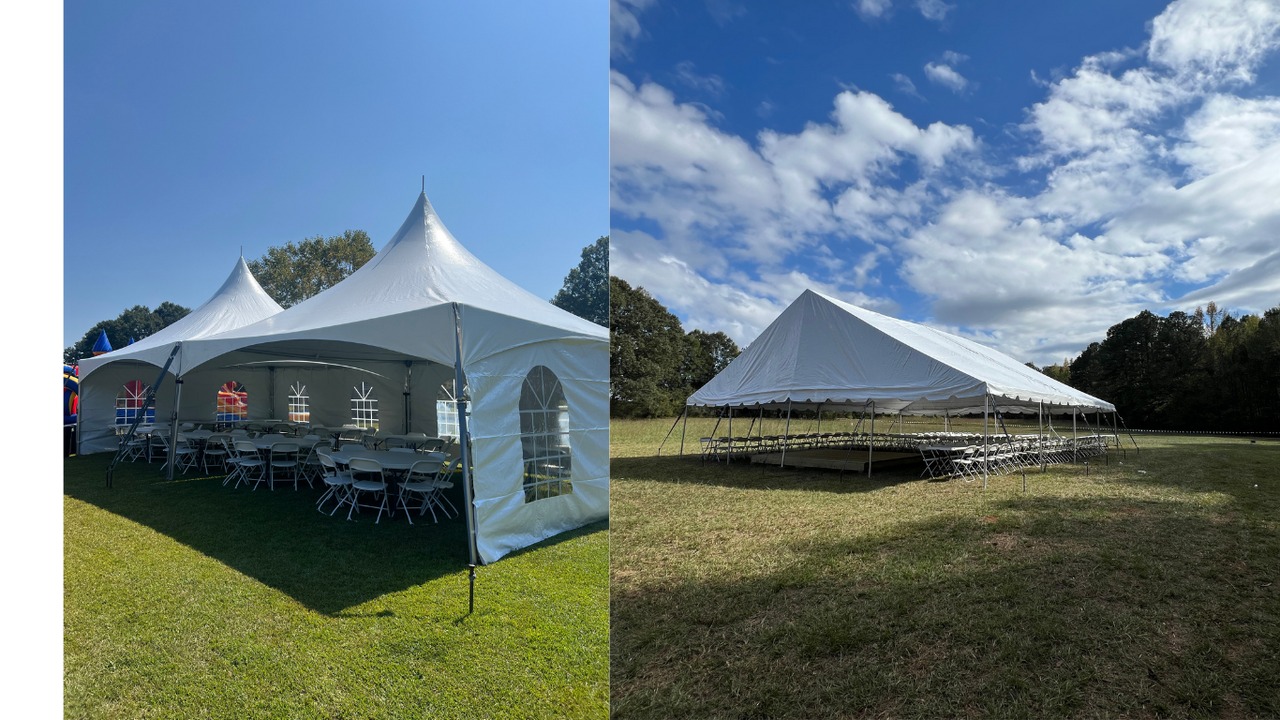
All of our tents are frame tents, which means there are no center poles in the middle of your event space.
What to Know Before Booking Your Tent
Free Site Visits
We offer 100% free site visits. No pressure. We will come out, walk your space, and show you exactly what will work for a safe and successful setup.
Space Requirements
Your setup area needs to be larger than the tent itself. Plan to add about 5 feet on each side for proper anchoring.
Example: A 20x40 tent typically needs about 30x50 feet of clear space.
Ground Conditions
Flat ground is ideal. If your space has a noticeable slope or grade change, that does not automatically rule out a tent, but it does require more planning to ensure a safe and level installation.
Look Up
- Tree branches and limbs
- Power lines
- Seasonal growth changes
Look Down
- Septic systems
- Sprinkler lines
- Landscape lighting
- Private electrical lines
Utility Locating and Permits
We call 811 and handle utility locating and permitting as needed. This covers public utility lines only.
Private items such as septic tanks, sprinkler systems, and added wiring must be identified by the customer.
Driveways and Hard Surfaces
If staking is not possible, we use concrete ballast systems to safely secure the tent.
Note: Ballast systems such as concrete weights may require additional charges.
Estimated Seating Capacity
| Tent Size | Round Tables | Rectangle Tables | Theater / Ceremony Seating |
|---|---|---|---|
| 20x20 High Peak | 32 | 48 | Up to 60 |
| 20x30 High Peak | 48 | 72 | 75 to 90 |
| 20x40 High Peak | 64 | 96 | 100+ |
| 20x60 High Peak | 96 | 144 | 150+ |
| 20x80 High Peak | 128 | 192 | 200+ |
| 30x30 Gable End | 80 | 96 | 150 |
| 30x45 Gable End | 120 | 144 | 225 |
| 30x60 Gable End | 160 | 192 | 300 |
| 40x40 Gable End | 128 | 160 | 260 |
Ready to Move Forward?
Browse our available tent options or request a quote and we will help you choose the right setup for your event.